Wednesday, February 4, 2015

Bunker Improvement

Hopefully you've been able to get out onto the course and enjoy yourselves in and around the snow days and freezing conditions. If you have, you might notice improvements to bunkers on holes 3, 7 and 14.

Sodding #7 bunker face
 
We've lowered bunker faces and raised the elevation of the bunker bottom. This should allow for fairer lies in these areas moving forward. Over time, sand blasted from the bunkers raises the elevation of the bunker face; also, erosion from heavy rain lowers the floor of the bunker. These two factors create a deeper bunker face (with a greater depth of sand) which results in plugged lies.

Our efforts have resulted in lessening the depth of sand around the bunker edges so that balls are less likely to plug and more likely to roll to the floor of bunker -- resulting in a fairer shot to the green.

Until grass growing weather, the wooden supports around the bunkers will remain in place. As soon as the sod has had a chance to root, the supports will be removed and the bunkers will be ready for play!

Hole #7 sodded.


Hole #3 sodded
 

Friday, November 21, 2014

Around the Grounds in Late Fall

We've experienced some fantastic golfing weather this fall. But this week Mother Nature delivered a blast of record-breaking cold to the area. Hopefully, this was just an isolated event and we'll have additional fair weather ahead before true winter settles in.


An air compressor...
Due to this week's Polar Vortex, your Maintenance Team moved up its timeline as it relates to winterizing the golf course. All comfort stations were winterized and the irrigation system was shut down. Ball washers, bubblers, waterfall features and fountains were winter-proofed and brought indoors were applicable. The weather is expected to moderate next week so we do plan on mowing all surfaces again at this time.


...blowing out the lines.
Besides routinemaintenance and leaf removal on the golf course this season, a critical cultural practice was also completed: a majority of next year's fertilizer was applied.

Some people are surprised to learn that most of the fertilizer applied to the golf course goes out in fall. In Northern Virginia, fall is the best time to feed the turf and prepare it for next season, We use an organic fertilizer that breaks down slowly and provides an even, steady feed over time.

Fall is also a great time to control perennial broadleaf weeds like dandelions and clover. In fall, the weeds prepare for winter by pulling nutrients and starches from their leaves and into their roots. By doing this, they also draw herbicides into their root systems, thus more effectively killing the weed. Actively growing grass will quickly fill in the bare spots created after the weeds die.

Thatch management is another wonderful fall cultural practice. Thatch is a build-up of living and dead grass roots and stems between the soil and green grass blades. The amount of thatch may be checked by cutting three to four inches down into the turf with a shovel and lifting up a piece of sod. Thatch looks like a thick tangle of dark brown roots above the soil. If thatch is greater than 1/2 inch, the area should be core aerated or dethatched. In areas with a thatch layer over 3/4 inch thick you should aerate then top dress with a thin layer of soil or compost. Topdressing adds micro-organisms that help break down thatch.

Finally, fall is a great time to scratch and seed any thin areas. Newly seeded areas must have adequate moisture for seed germination and seedling growth. The seedbed and later seedling must be kept mois for six weeks.

Let's all hope for improved weather, followed by a mild winter. In this way, we'll al be able to get out and enjoy the golf course.


Monday, September 22, 2014

Driving Range Etiquette...

Our Driving Range has re-opened after this summer's renovation. An improved short game area was constructed and the range tee was re-grassed to Bermuda grass. Bermuda grass is much hardier than Bent grass in the summer months and will recover more quickly after use.

In order to maximize the practice space on the tee please adhere to the following protocol:


And avoid this:


To see what the USGA has to say about Practice Tee etiquette, click  HERE.


Monday, August 18, 2014

Improving consistency in the rough...

Selective removal of creeping bentgrass from a tee surround
Dominion Valley CC was designed and built with the idea of utilizing bent grass for tees, greens and fairways; and bluegrass in roughs.Over time, bent grass has encroached into some of the rough areas. The Maintenance Team has begun treating roughs to remove existing bent grass. Then we will seed thin areas with bluegrass/tall fescue seed. The goal is to have more consistent roughs to play from next season, and beyond.

Tuesday, August 12, 2014

Cicada Killer Wasps

Cicada Killer Wasp and its prey
 In mid-to-late summer golfers may begin to encounter large wasps with distinctive bands of white and yellow on black bodies around tees, greens and bunker faces. The head and thorax are a rusty red and the wings are tinged with yellow. The body is about 1 1/4 to 1 1/2 inches long. The wing span approaches three inches. Their large size and habit of buzzing around a person intimidates many.

The female wasps are equipped with a stinger and if seriously provoked can produce a sting. The females are territorial and will investigate any thing or anyone coming near their nest burrow. If a person stands still, the female will usually go on about her business.

When cicada killers first emerge, the males are very territorial and will fight with each other while establishing territories. Once females begin to emerge the males will make every attempt to defend their territory against any invader, including people. The males do not have a stinger and are harmless. However, they can intimidate anyone who is afraid of bees and wasps.

Cicada killers are solitary wasps. This means that each female has her own burrow. The burrows are dug in well drained sites. They prefer sandy or bare soils, but will also construct burrows in areas where the grass is kept very short. They can be a real problem on golf courses since greens and tees are typically constructed on a sand-based substrate. They can also become and issue around bunkers and bunker faces.

Damage to a putting green
Cicada killers hunt annual cicadas in trees. When a cicada is spotted, the wasp zooms in and attempts to sting the cicada. The cicada will utter a buzzing shriek until it becomes paralyzed. Once the cicada becomes motionless, the wasp will carry the cicada to a high point and attempt to fly back to her burrow. While larger wasps may be successful on the first attempt, smaller wasps may need to repeat the process several times.

Inside the burrow, the wasp places the cicada in a side chamber and lays an egg on it. The egg hatches, and the wasp larva feeds on the body fluids of the paralyzed cicada. Development is completed within two weeks and the wasp larva forms a cocoon. The winter is spent in the larval stage and pupates the following spring. Adult emergence coincides with the emergence of annual cicadas.

So, the best way to minimize damage to putting greens NEXT year is to aggressively treat burrows THIS year. Your Maintenance Team is out early every morning and throughout the day, scouting and treating any affected areas. If you happen across a burrow during your round of golf, contact the Pro Shop immediately and they'll direct the Maintenance Team to the area to treat it.

To see a video of a Cicada Killer Wasp digging a burrow click HERE.

Monday, August 11, 2014

The Need for Speed


A challenge that Golf Course Superintendents face is to achieve and maintain acceptable green speed while also maintaining healthy turf. Balancing the needs of the golfer with the needs of the turfgrass plant is an important aspect of any Superintendent’s job.

Golfers expect firm, fast greens. But what does it take to achieve this standard? How do we prepare the turf? How do we measure green speed? And, what might happen to a green if pushed too hard?

To measure green speed, Superintendents use a device called a Stimpmeter. It’s an inclined plane designed to release a golf ball at a consistent angle. In short, the distance a ball rolls is measured and averaged to get a number, or “Stimp”.

The Stimpmeter was invented years ago by a man named Edward Stimpson. The original purpose of the Stimpmeter was to ensure that all the greens on a course were of relatively equal speed.  The idea was to give superintendents a way to compare the speed of the 4th green with, say, the 13th and take steps to equalize them.  This was a good idea.

But sometimes bad things happen to good ideas.
 
Today, his simple tool, the Stimpmeter, is often misused to compare the speed of greens from course to course and unfortunately, to establish a benchmark of putting difficulty.


A Stimpmeter in action
From a competitive standpoint, that’s OK.  However, the quest for faster greens has consequences in terms of cost, environmental quality and the health of greens.  In short, speed can kill.  Here’s why:
Measuring to determine green speed


A healthy, vigorous green can be maintained at a very short cutting height for short periods of time without serious consequences if it’s been prepared properly and weather condition are acceptable.  Courses hosting tournaments often take months (and spend significant extra money) to bring greens up to an ultrafast speed for PGA Tour players.  For example, the greens at Augusta National or Oakmont may “stimp” up to 14 feet when properly prepared and dry.

However, fast greens are extremely fragile.

 If you compared them with human beings, it would be fair to say that their immune systems are weakened.  They become more susceptible to diseases and pests, and may require more chemical treatments.  Weather can also quickly destroy the health of an ultrafast green.  High temperatures and lack of moisture (or too much moisture) in the air or in the soil can be deadly to greens that are maintained at very short cutting heights.

Turfgrass root systems play an important role in the turf’s ability to withstand stress. Healthier, deeper roots translate into better stress tolerance.  So, as it turns out, the quality of a putting green at the surface is really dependant upon what is going on below the surface. In order for grass to grow at 1/10-inch height of cut or less, it needs deep, healthy roots. Good roots demand oxygen. In good soil, they get oxygen from the tiny pockets of air trapped between soil and sand particles.


Over time, the traffic from mowing equipment and golfer’s feet tend to compact the soil. When the soil becomes compacted, the air pockets on which the roots depend are crushed and the roots are, essentially, left gasping for air. Without oxygen, the grass will become weaker and eventually die.

Aerification is a mechanical process that creates more air space in the soil and promotes deeper rooting. In most cases it’s done by removing ½-inch cores from compacted soil, allowing for an infusion of air, water and nutrients. The spaces are then filled with sand “topdressing” that helps the soil retain air space. This is the typical, twice-a-year aerification that golfers have come to know and dislike since it is so disruptive.


a coring tine, a needle tine and a deep needle tine


But other aerifications take place throughout the year that don’t impact play but do play a critical role in growing and maintaining deep, healthy roots. In early winter and again in early spring, for example, a solid, deep-tine aerification is ideal for opening a channel down to the deepest level of the green. This process allows the plant to grow the longest possible roots at a time of the year when it is able and wanting to gain root mass. And since no cores are removed and the holes are so small in diameter, most golfers aren’t even aware that a cultural practice occurred. Later in the heat of late spring or summer, small needle tines are used to ventilate the green and allow for a gas exchange between the rootzone and the atmosphere. This is a critical cultural practice because as the soil temperature increases, the micro-organisms present in the soil become more active and consume more oxygen as a part of their life cycle; and just like animals breathing in and out, micro-organisms also release carbon dioxide as they consume oxygen. It is this gas, the carbon dioxide, that needs to be vented to the atmosphere or root mass will decline. Even worse for fine turf, if there isn’t enough oxygen present in the soil for micro-organisms to use, they’ll use sulfur instead to complete their life cycle and release hydrogen sulfide gas in the process, which is deadly to turf grass roots.

So, a lot of cultural work, below the surface, goes into maintaining firm, fast greens. Your Maintenance Team is constantly evolving techniques and procedures that maximize playability while minimizing surface disruption.  Our approach for the future must always be to improve the underground environment in which the root systems exist so that we can then provide the best possible above ground playing conditions. If we continue to care for the rootzone--the part of the green we DON’T see—it will in turn take care of that part of the green that we DO see, and continue to allow us the opportunity to provide firm, fast greens.

When it comes to putting greens… Out of sight should never be out of mind.

Tuesday, July 22, 2014

Handwatering for Healthier Turf


As the summer sun beats down upon us and the temperatures rise, water management on the golf course becomes even more critical. But even in this day of computer controlled automatic irrigation systems; sometimes the only way to put out just the right amount of water is by using an old-fashioned garden hose: handwatering.  Believe it or not, handwatering is still the best way to place a specific quantity of water on a specific area of turf. All it takes is a practiced eye, a soil probe, a hose, nozzle and, of course, a water source.

There are many reasons for modern day handwatering. The main one might be to compensate for design limitations in the irrigation system. Other reasons include water conservation, soil textural differences, syringing to cool the grass plant and elevation changes on the course. The most important end result however, is it makes possible consistent quality putting surfaces.


Some of the reasons for handwatering deserve closer scrutiny.

Poor Sprinkler Coverage: The design of an irrigation system has its limitation. Sprinkler heads can’t always be perfectly placed since that placement might require them to be in a bunker, or on a green or tee. Even with the best design, changes in elevation, and the distance the sprinkler heads are from the pump station will affect water pressure and performance.

Soil Texture Differences: Areas of the golf course have different textured soils. To avoid overwatering one area we sometimes have to underwater an adjacent area. We must compensate, therefore, by handwatering the areas that do not receive enough water. Also, some of our soils take water so slowly we must water them until runoff occurs, then come back and water them again 30 to 60 minutes later.

Water Conservation: The course collects irrigation water primarily from rainfall run off and stores it in ponds for later use. There are also wells that can be run to assist with pond refill. But in the end the course will run short of water if it doesn’t rain for an extended time. Before that happens we’ll reduce the use of overhead sprinklers and rely more on handwatering to stretch out the use of the resource.

To Cool Grass Plants That Are Under Stress: Many times during the summer, high temperature, hours of intense sunlight and wind combine to dry out turf to the point that it literally wilts. So, we rely on experienced staff members who can recognize the condition and can take corrective action. Remember, we are only cooling off the leaf tissue at this point, not wetting the soil. Technically, this is called syringing.

To Keep Consistent Putting Greens: This might be the most important reason for handwatering. Our goal is to provide the best putting surfaces possible. We want surfaces that are smooth, true, of consistent speed, and that will hold a properly struck golf shot. Even the best-designed irrigation system will not produce a green with uniform moisture content throughout. After an irrigation cycle, one area of the green will always be wetter than another. So adding water selectively to the drier areas allows us to maximize playability without sacrificing plant health.


Occasionally, we will treat dry spots with wetting agents to aid water penetration. We might also spike areas with small aerifier tines to help the water penetrate and keep our greens as uniformly consistent as possible.

When we handwater, we are careful not to apply so much water it lies on the green for longer than one minute. It just so happens that the time of day we must be out handwatering coincides with the time of day our golf course tends to be the busiest, and we do not want to interfere with play any more than necessary.


To hear what the USGA has to say about handwatering click here.

The bottom line is that to have consistent, playable greens, you must consider handwatering to be a routine part of putting green maintenance. For the best possible putting greens, it's an art worth perfecting.

Thursday, April 10, 2014

Hazard Stakes TLC...

Using a jointer/planer to renew a hazard stake


Not too long ago the course was covered in snow and frozen solid. Temperatures had remained below average for weeks; storms had moved through the area leaving accumulations of ice and snow behind... Yet, despite these challenges, your Maintenance Team remained productive.

The highest priority for the Team during winter storms was to keep the club open. They were out early, shoveling the sidewalks and parking lots--ensuring these areas were passable and safe. Next, they checked the course for damage.

After spending the morning out in the cold, there were plenty of "indoor" projects to keep the Team busy. Above, Bernie is using a woodworking jointer to plane an old hazard stake. Over time, the color of the stakes can fade but by removing a bit of material the stake can be returned to "good as new" condition.

Before and After


We're glad that Mother Nature has relented and afforded us the opportunity to get back out on the course to complete our winter "outdoor" projects. But rest assured that, no matter what the weather, your Maintenance Team has a plan to remain productive and work toward the betterment of your golf course.

Monday, April 7, 2014

Golf Cart Access....

The goal of directing golf cart traffic is to maintain pace of play while avoiding a concentration of traffic in any one area. Invariably, some portions of the course receive more than their fair share of traffic. Over the winter we've been installing stone pavers in the highest traffic areas to more permanently address chronically worn areas. But we've also developed a gate system we hope will further disperse traffic while maintaining pace of play.


Gate Post Construction
 

The poor weather experienced over the last few weeks has allowed the Maintenance Team the opportunity to design and build a new golf cart access system. We now have green and red posts on selected holes. On days that carts are permitted to leave the cart paths, we'll be using a system slightly different from the 90 degree rule. Now, after hitting your tee shot and moving toward the landing area to play your next shot, there will be green posts near the cart path. Remain on the cart path until you reach the green posts, then you may leave the path, drive to your ball and play your next shot. Later on, when you approach the green there will be red posts. We ask that all golf carts return to the cart path before passing the red posts.
 
The Maintenance Team will move the posts daily, or as required, to avoid excessive wear.
 
Green Posts: Leave cart path anytime after this point
Red Posts: Return to path before passing this point


Monday, February 3, 2014

Divot Mix...


The course is covered in snow and frozen solid. Temperatures have remained well below average the entire week. Storms have moved through the area leaving accumulations of ice and snow in their wake… Yet, despite these challenges, your Maintenance Team has remained productive this week.
The highest priority for the Team during weather events is keeping the club open. You’ll see the Maintenance Team out early, shoveling the sidewalks and parking lots—making certain those areas are safe and passable. Next we’ll check the course to be certain no major issues have arisen.
After spending the morning out in the cold, there is plenty of “indoor” work to keep the Team busy. Above, Hernan is blending divot mix. He’s using a cement mixer to make a 100 pound batch. He blends sand, fertilizer, wetting agent, seed and green dye together.
Over the winter, the Team will blend about 20 tons of divot mix. All of the containers that hold the divot mix were constructed at the Maintenance Facility; each bin holds one ton of divot mix---which is the rated capacity of our front-end loader tractor. This ensures the process for moving and storing divot mix is as efficient as it can be.


Friday, January 24, 2014

Winter Projects...


The verdict is in and the decision is unanimous: Mother Nature won the battle this week. According to local news reports, our area experienced the coldest weather in the last twenty years. The course was covered in snow and frozen solid.

That doesn’t mean the Maintenance Team was unproductive however. There are always projects for our multi-talented staff to complete. This week, for example, the team sanded and re-painted many of our tee markers.


Before and After


Hopefully we'll see improvement in the weather next week and the staff will again be able to get out on the course to change cups, roll greens and work on other winter “outdoor” projects.

 Rest assured however that, whatever the weather, the Maintenance Team, always has a plan to remain productive and work toward the betterment of your golf course.


Thursday, January 16, 2014

Cartpath improvement.


Dominion Valley has an excellent cart path system. It forms a continuous trail around the course that is eight feet wide and widens to ten feet at all tee and green complexes. In a perfect world, every part of the course--including the turf adjacent the cart paths--would receive equal use and wear and tear would be distributed accordingly. Invariably however, some areas nearest the paths receive more than their fair share of use and require extra attention from the maintenance team.

Where carts enter and exit to the fairway, or near the greens, for example, turf alongside the path can suffer. Historically, we've stripped and sodded these areas in the off-season. This year however, we're trying something new: we've purchased cobblestone pavers and are placing them in some of the high-traffic areas.

The process is straight-forward: The area to be covered is marked and excavated; a base of crushed stone is added and compacted; and the cobblestones are installed and top-dressed with stone dust.

When completed, damage to high-traffic areas should be less noticeable and the look of the course should be more pleasing.

Tuesday, January 14, 2014

Tee it Forward...


#6 Tee


Hopefully Mother Nature will cooperate and allows us the opportunity to get out and enjoy the golf course this winter. If so, it’s important to remember that the grass has stopped growing until spring. This means that any damage to the course will remain until spring when growing conditions will again allow for recovery.

With this thought in mind, we’ve decided to move the tee markers forward on the tee boxes for the winter and leave them there. This will confine wear and tear to the front of the tee box and protect the majority of the teeing areas.

In the spring, we’ll develop a plan to get the tee fronts back into shape. Most likely, we’ll need to strip and sod some forward areas; but some combination of fertilizer, seed, sod and good growing weather is really all that will be needed.

So, until spring… Get out and enjoy the course.


Monday, March 5, 2012

It's Cultural: Verticutting Fairways

Verticut blades
Verticutting or vertical-mowing is a cultural practice that uses a series of vertical blades to slice into the soil surface(or just above) to cut lateral leaf tissue and reduce organic matter.  The removal of this material provides a faster playing surface, makes the plant stand upright for a better cut/lie and allows water to better penetrate the soil.  Over time, an over accumulation of organic material(otherwise known as thatch) can be detrimental to playing conditions and plant health.  A single verticutting can reduce the organic matter by up to 15%, making this simple non-invasive practice a valuable tool in maintaining quality turgrass.

The finished product.
As with all the cultural practices we preform, timing is extremely important.  Weather dictates how aggressive we can be while verticutting.  Typically, the spring and the fall are ideal for verticutting into the soil.  During periods of extreme heat and humidity; grooming(just into the canopy of the plant) is the best choice.  Grooming is used to get the plant upright for a better cut, thin the canopy and remove old growth; not for thatch removal.  

Please let us know if you have any questions about verticutting or any other post on our site.      


Wednesday, February 29, 2012

Bunker Renovation: #3 Regency

Without question, the third hole on Regency has one the most talked about bunkers on the golf course; the rear green-side bunker.  With the steep slope behind the green and poor visibility from the tee, the playability was far from "par-fect". We decided it was finally time for a renovation.  There are many options available when renovating or constructing a bunker and it's important to select one that fits the course.  In this particular situation the bunker was getting a tremendous amount of surface water from the surrounding slopes.  With that, we inspected the areas around the bunker and looked for options to redirect the surface water.  One big improvement would be the addition of a curb on the cart path.  The curb would connect two existing sections and extend it to the bottom of the hill behind the green.  We hope to add this curbing very soon.

In the bunker, the old sand and drainage was removed.  The outflow pipe had to be inspected to ensure excess water would flow out of the bunker.  This portion of the project is very important, if any problems exist, they must be addressed before progressing.  In our case the pipe was functioning perfectly, so its on to the next step.

Not only was this bunker one of the most problematic, but it's the smallest on the course.  The existing single section of drain pipe in the bunker floor would've been sufficient, but we added a small section towards the top to slow water flow to the base of the bunker.

With the drainage complete, it was time to address the bunker floor.  We graded the base and added a product called "Sand daM".  This product is designed to prevent sand particle movement in bunkers from rainfall and irrigation.  It's made from non-biodegradable polyester and synthetic binders from 3/4" to 1".  The idea was to prevent as many washouts as possible and eliminate at least one source of sand contamination.  This porous mat will also prevent rocks and other debris from migrating up into the sand.  The addition of the Sand daM will make a big difference in the long term maintenance and aesthetics of the bunker.

It was then topped off with six inches of sand and is ready for play.  Please let us know if you have any questions about this bunker or any other post on the site.  Enjoy!

Thursday, February 9, 2012

The USGA on Winter Play

As winter continues, so does the unseasonably warm temperatures and opportunities to hit the golf course.  Are there risks associated with increased play during the winter months?  That's a tough question to answer and it can only be determined by local conditions.  The USGA and Darin S. Bevard explain some of those factors below.

Bonus Golf: Take Note of the Risks

By Darin S. Bevard, senior agronomist, Mid-Atlantic Region
January 31, 2012


While some light snow has fallen at times and reminded us that it is winter, milder than normal temperatures have been the rule. Nicer weather has allowed for more golf than usual to be played during the winter months, but there may be consequences in the spring.

For the past several weeks there have been many opportunities for golfers to get out and enjoy the weather, and their favorite golf course. With the extreme wet conditions of late summer/early fall, this bonus golf has been great for the golfers, and has helped the bottom lines of many golf courses. The mild weather has also rekindled the debate over winter play and the potential agronomic downside of excess traffic, especially on greens.

In the last couple of years, frequent snowfall and cold temperatures have rendered the winter play conversation a moot point. This winter we have been blessed with plenty of days to play golf, and golfers who want to play. The result - the back and forth debate over whether greens should be open or closed. There is no right or wrong answer to this question because of the different needs of individual golf facilities and the different weather conditions.

Common sense dictates that winter play is bad for grass, especially greens. Extra traffic under often marginal conditions causes wear. The difficulty is quantifying the cost of this damage from the perspective of impacts on in-season playing quality in addition to the cost to repair damage that may (or may not) occur with winter play.

Some golf courses simply close completely or close their greens during the winter. If this is an option for your facility, great. Even if only a few greens that are already difficult to manage in season could be closed, the reduction in winter wear will be beneficial. If your course chooses to play golf during the winter, decisions on playability of the golf course should be made on a daily basis. If it is too wet or the greens are partially frozen, the risk for damage is greater. The worst case scenario is thawed conditions at the immediate surface and frozen conditions one or two inches below the surface. The bottom line is, you must weigh the pros and cons for your individual situation and act accordingly.

If there are any questions on winter play, give us a call. We will be happy to visit with you about this issue and provide information that may help with a tough decision.

With the relatively warm weather, there are agronomic concerns too. On Poa annua greens, isolated areas of active anthracnosePoa annua has even hardened-off sufficiently to tolerate low temperatures. Warm temperatures reduce hardening in Poa annua, making the grass more susceptible to winterkill. Without snow cover, the grass has less insulation from sudden drops in temperature, which is the primary cause of crown hydration, especially in grass that is not sufficiently hardened. Time will tell, but this is a cause for concern in the northern tier of the region. Enjoy some bonus golf when the opportunity arises, but realize there are still concerns from winter traffic and Mother Nature.

Wednesday, January 18, 2012

A Throne: Fit for a King


Before
After
If you've ever visited a restroom on the golf course, then there's a chance an HGTV remodeling show has come to mind and how a few changes might not be a bad idea.  Well, the updating is underway!  Fresh paint, new vanities, wainscoting and a lot of hard work is transforming our restrooms to original condition. The project started this summer and Dominion Valley is complete.  The Regency is now underway and will be completed by the end of February.  

We would like to express our sincere thanks to Bernie Cole for executing the project.  He is doing a tremendous job and his continued attention to detail is remarkable.

Please enjoy your new facilities.


After


Bernie Cole

Tuesday, January 10, 2012

DVCC goes Green........er

Dominion Valley is a proud member  of the Audubon Cooperative Sanctuary Program, created and administered by Audubon International.  Its mission is to improve the quality of life and the environment through research, education and conservation assistance.  Under its program we are striving to implement best management practices in environmental planning, wildlife and habitat management, chemical use reduction and safety, water conservation, water quality management, and community outreach and education.  Our goal is to have our efforts in environmental stewardship recognized by becoming certified as an Audubon Cooperative Sanctuary.

Currently, we are working on environmental planning, wildlife and habitat management portions of the program.  Look for a post on bird nest houses in the near future. 

If you have any questions please feel free to contact us!

Friday, January 6, 2012

#18 Drainage

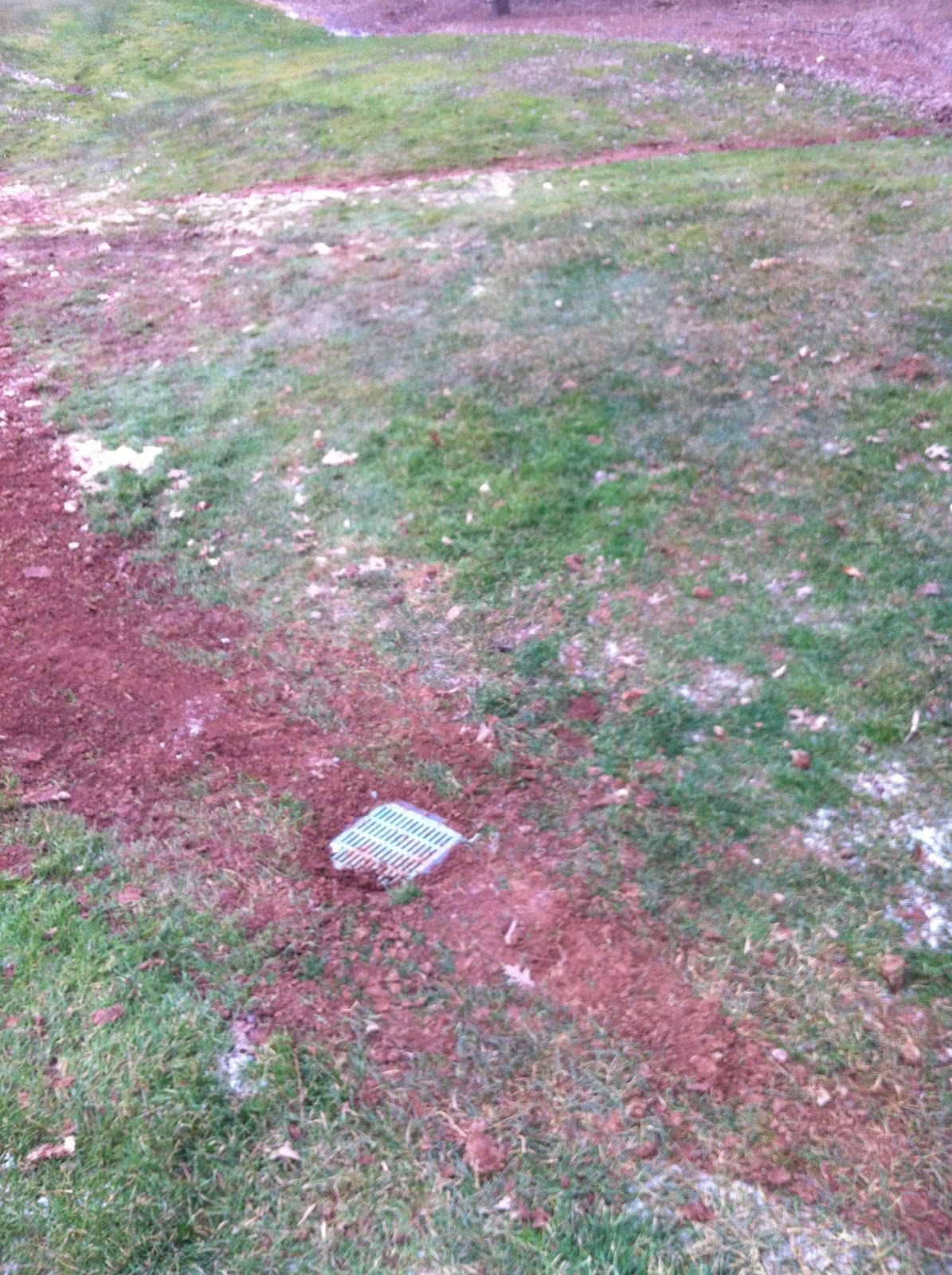
Recently, we completed some much needed drainage projects on hole eighteen.  As stated in the previous posts, similar projects will continue through the winter.  The goal is simple, remove surface and subsurface water from areas that remain wet.   Commonly, the best approach is to create a trench, add pipe, gravel, catch basins(if needed), regrade and sod. 
Garrett Neville and Fred Philipp trench near #18 approach

A catch basin is added to collect surface water.

The catch basin installed.

Drainage on the 2nd fairway on hole 18.